Knowledge baseBasics
Hashrate: what the number means and how to read it
Hashrate is how many hashes a miner computes per second, and the number every mining income starts from. Its units, why it differs from what the pool credits, and how FARMGOD shows it.
A miner earns by trying solutions, and hashrate is how many it tries per second. More hashrate means a larger share of the rewards. That makes it the first number to look at, and the first to drop when something is wrong.
The units
The unit depends on the algorithm, and the numbers of two algorithms can never be added up.
- SHA-256: terahashes per second (TH/s) for a machine, petahashes and exahashes (PH/s, EH/s) for a farm.
- Scrypt: megahashes and gigahashes per second (MH/s, GH/s).
- kHeavyHash: terahashes per second (TH/s).
- Equihash: solutions per second.
- Eaglesong: terahashes per second (TH/s).
- Blake2b: gigahashes and terahashes per second (GH/s, TH/s).
Three hashrates of the same miner
- The nominal hashrate is what the model should deliver.
- The miner's own hashrate is what its firmware measures on the boards.
- The pool's hashrate is what the pool works out from the shares it received. That is the one you are paid for.
When the pool's number stays under the miner's own, work is being lost on the way: rejected shares, a poor network connection, or a pool that is far away.
Why hashrate drops
Failed chips or a failed hashboard, heat that makes the firmware slow down, a low power mode, curtailment, or a miner that has stopped hashing altogether.
Hashrate in FARMGOD
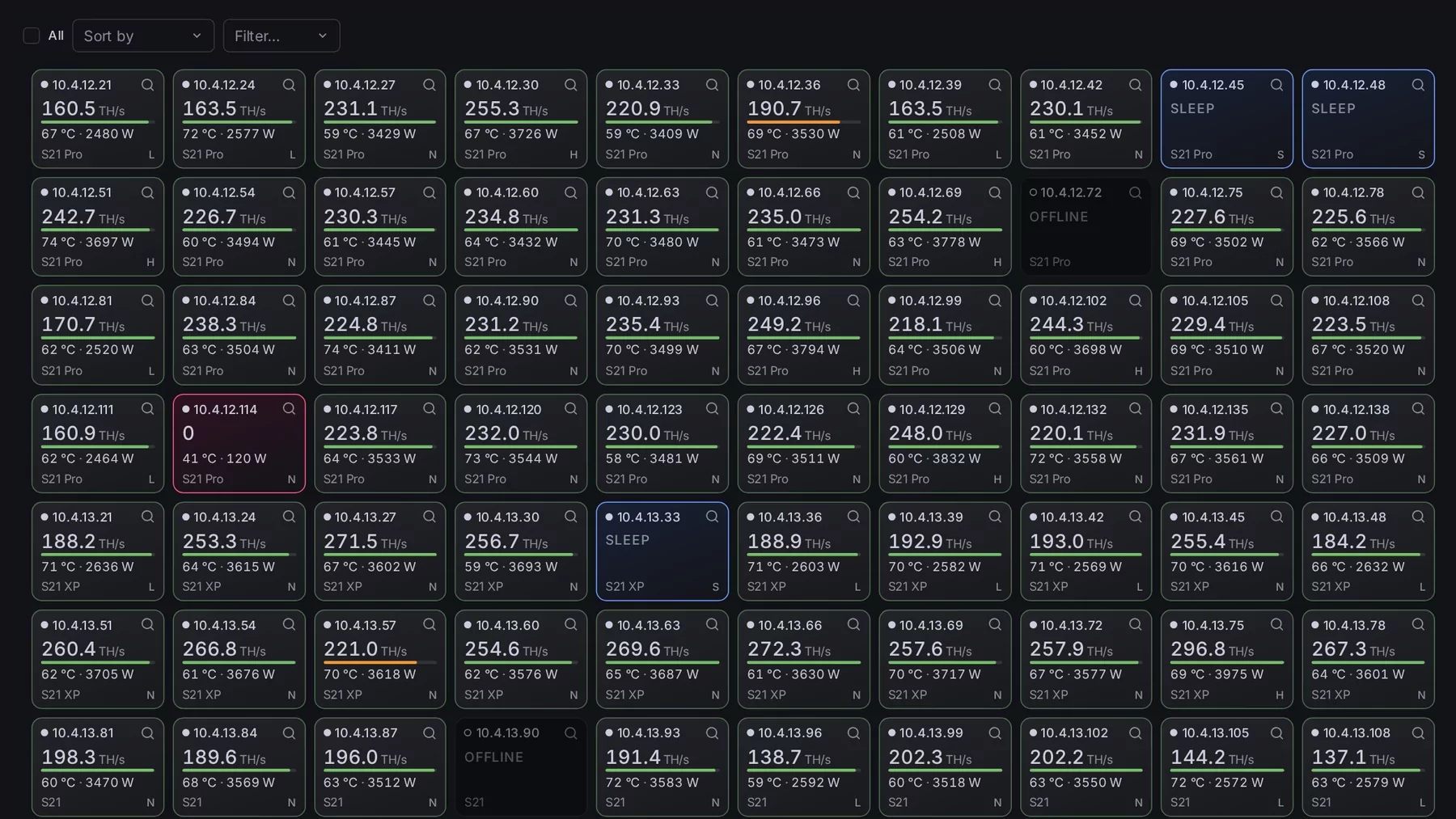
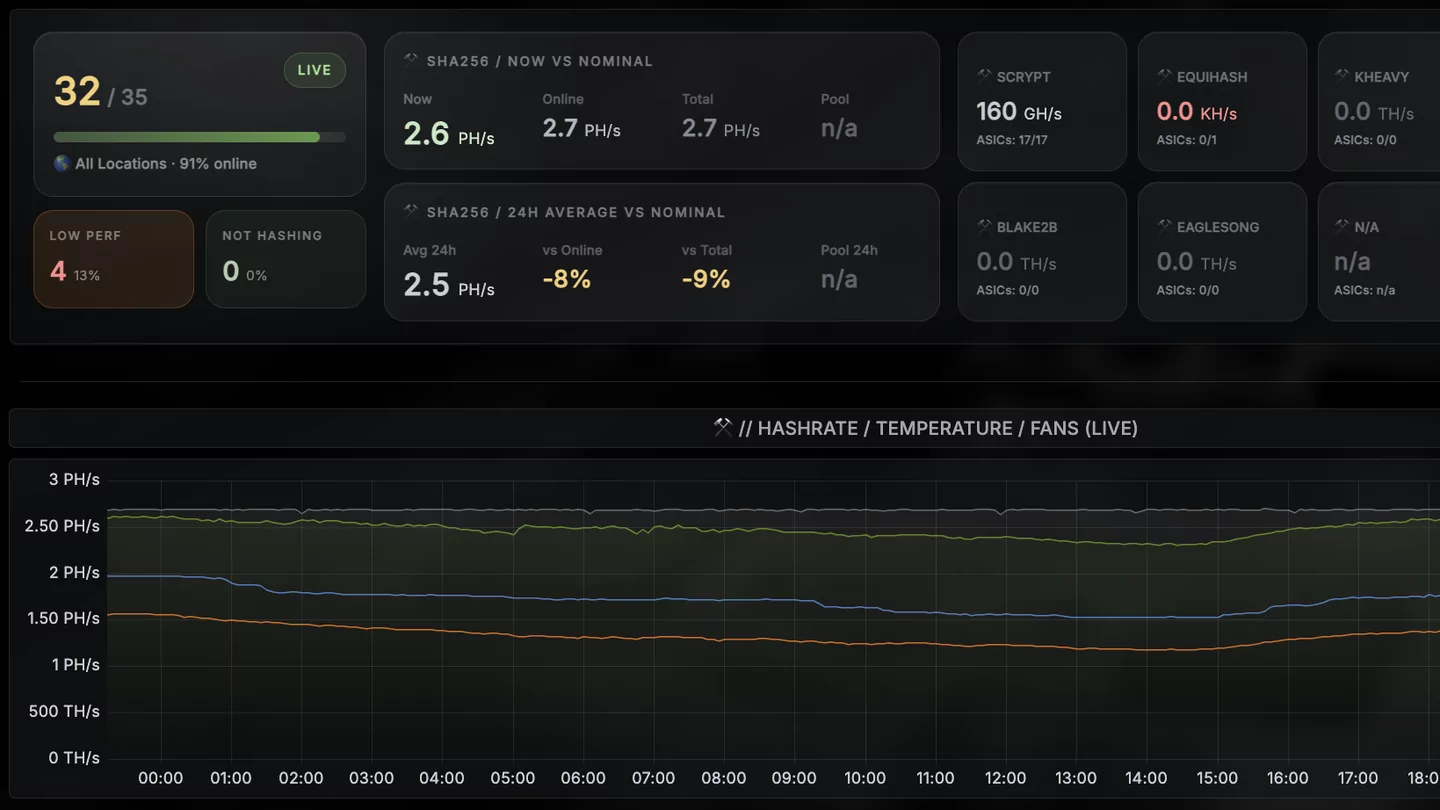
- At every level: for a single miner, a Device-Set, a location and the whole fleet, live and as a chart.
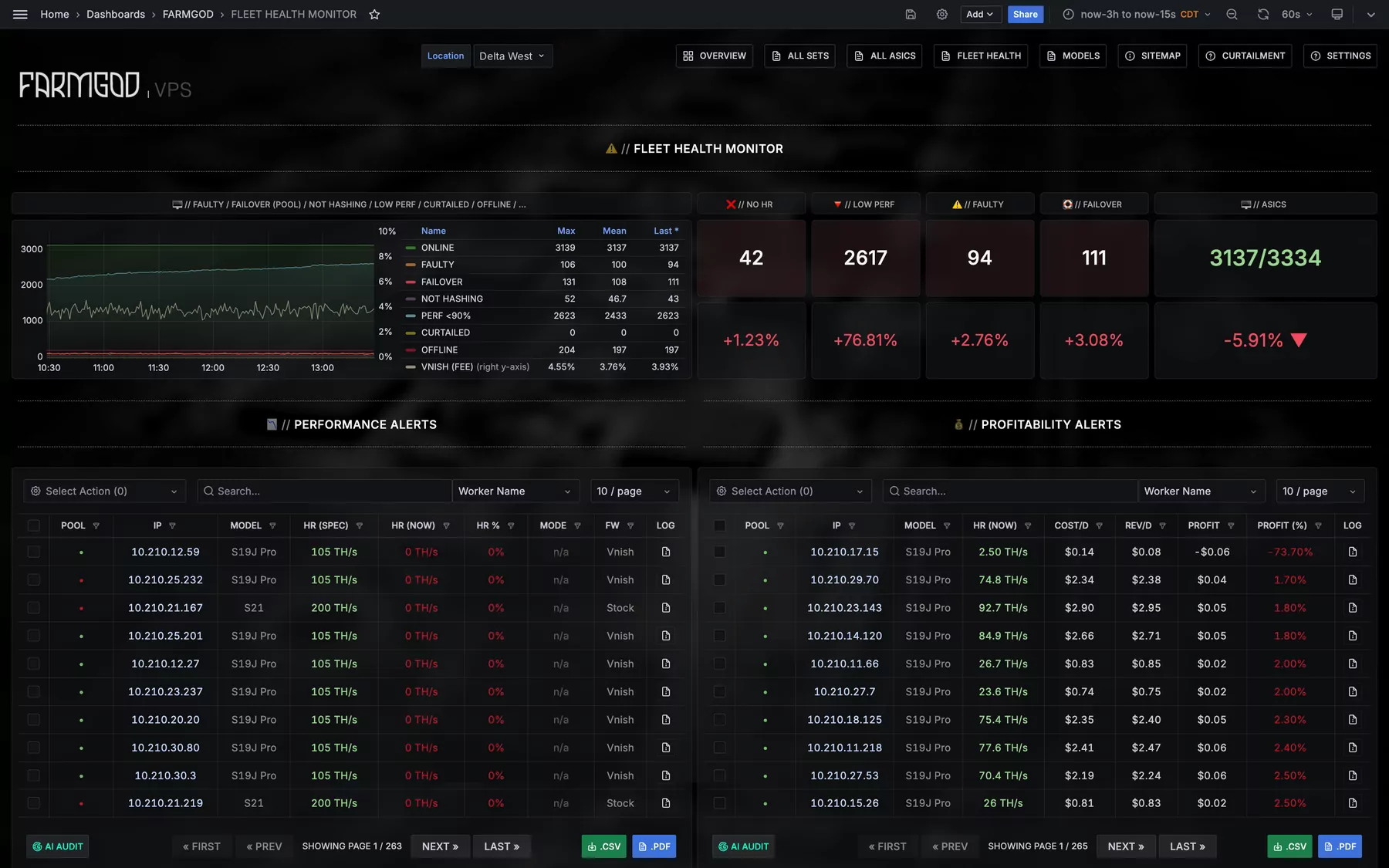
- Against the spec. Each miner's hashrate is compared with what its model should deliver. Fleet Health lists the miners under 90%.
- Next to the pool's number, so lost work shows.
- Turned into money. With your electricity price and fees, hashrate becomes daily profit, margin and break-even price.
Getting started
FARMGOD Cloud is free for up to five miners, with no time limit. Sign up, start FARMGOD.OS on a spare PC in your miners' network and run a scan: every miner's hashrate is on your dashboard. Get started shows the three steps. For a whole farm, a Private VPS brings every feature on a server of your own: see the pricing.